HIV Treatment
HIV Treatment

WHERE ARE WE WITH HIV TREATMENT?

HOW IS HIV TREATED?
WHAT ARE THE BENEFITS AND GOALS OF HIV TREATMENT?
- slow down and prevent the progression of HIV through the stages 1 to 4
- help people with HIV live longer and healthier
- reduce the risk of transmission to HIV-negative people. One of the main goals of treatment is to reduce a person’s viral load to an undetectable level. People with HIV who maintain an undetectable level of virus in their blood have no risk of transmitting HIV to others, including their HIV-negative sexual partner
DECIDING ON TREATMENT FOR EACH PATIENT
- Determine the timeframe for starting treatment
- Decide on first- or second-line treatment
- Choose the drugs in the regimen
- Provide education to encourage adherence to medication
In some instances, treatment will not be started immediately after diagnosis. Special screening (testing) will be done to find out if a patient has tuberculosis (TB) or any other chronic condition or infection that may affect the type of medication that can be prescribed.1d For example, if a patient is found to have TB at the time of testing for HIV, antiretroviral therapy will only be started after a minimum of 2 weeks after starting TB treatment when a person is stable on the TB treatment.1e For further information on HIV and co-infection with TB. Starting daily antiretroviral therapy as soon as possible after diagnosis and staying on treatment are essential for keeping HIV under control, which benefits individual health and prevents HIV transmission to others.7a
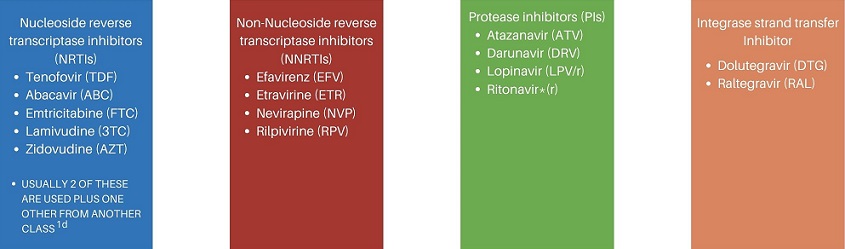
DIFFERENT TYPES OF HIV MEDICINES
DID YOU KNOW?
WHEN WOULD A PATIENT REQUIRE A SWITCH OF THERAPY FROM FIRST-LINE TO SECOND-LINE OPTIONS?

WHAT IS NEW IN HIV TREATMENT?
- improved efficacy with rapid viral suppression
- reduced resistance
- better tolerability and fewer side effects
- combining medications into single and smaller tablets to reduce the pill burden
- single daily dosing
Medical References