Eczema
Eczema
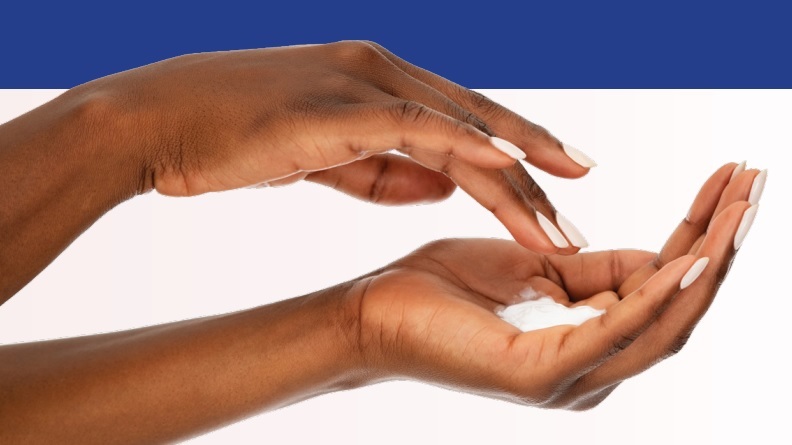

Eczema can be distressing to both sufferers and their families, so it’s important to manage this common disorder with the best daily skin routine available.
What is eczema?
Who gets eczema?
Symptoms of eczema
- Itching
- Dry, scaly (flaky) patches
- Red rash (especially noticeable on people with lighter skin tones)
- Dark brown, purple or grey patches (especially on darker skin tones)
- Small, rough bumps (more common on darker skin tones)
- Warm skin that may be swollen because of inflammation
- Raw skin, scratch marks
- Bumps, rashes or blisters that ooze fluid and may crust over
- After healing, previously affected areas may appear lighter or darker than surrounding skin.
- Broken skin that may bleed
- Skin infections.
Over many years, repeated flare-ups and scratching can cause the skin to become thickened, cracked and persistently itchy.9 Poor sleep from itching and discomfort at night is common in anyone who has eczema.2,9
What causes eczema?
How is eczema diagnosed?
How is eczema treated?
- Routine skin care, such as moisturising after bathing to help hydrate the skin and recreate its protective layer. Choose a reputable product such as E45 Cream, an emollient suitable for moisturising dry skin in a variety of skin conditions, including eczema.
- Prescription medications. These are usually topical ointments applied to the skin, to help exclude irritants and germs, while retaining moisture. If secondary infections develop from eczema, your doctor may also prescribe topical or oral antibiotics.
- Phototherapy, which involves using ultraviolet light in a medical setting to treat symptoms.
Living with eczema
- Moisturise throughout the day with an emollient such as E45 Cream, specifically designed to help break the itch-scratch cycle. E45 Cream helps soften rough, hard skin, restore damage and prevent further breakdown of the natural protective barrier. It may be applied as frequently as needed and is suitable for all ages.11
- Complete your family’s daily skin care routine with a fragrance-free lotion from the E45 range, to further moisturise and soothe dry skin. E45 Moisturising Lotion, for example, is a light formulation that helps keep skin soft and supple.12-17
 Take lukewarm baths or showers (maximum one per day) to clean the skin without drying it out excessively. Substitute soap with an emollient such as E45 Cream. Don’t dry off completely after bathing; pat dry gently then moisturise immediately to replenish dry skin.2 Don’t scratch or rub: this irritates the skin and increases inflammation and itchiness. Keep fingernails short.10 Lightly pinch or pat itchy skin instead. A cold compress, such a bag of frozen peas or ice wrapped in a towel, may reduce the itch. Don’t apply ice directly to the skin.2 Identify and avoid triggers where possible. Protect your skin from irritants and rough or scratchy clothing.10 Keep indoor temperature and humidity constant. Keep your home at a cool, pleasant temperature, and don’t let the air get too dry.10 Manage stress. Stress management and relaxation techniques can help reduce flare-ups.10 Get support. If you’re feeling overwhelmed about your eczema, reach out to family, friends and patient support groups, and consider consulting a mental health professional.10
Medical References
- American Academy of Dermatology Association. Eczema Types: Atopic Dermatitis Overview. Updated October 2023. Available from: https://www.aad.org/public/diseases/eczema/types/atopic-dermatitis
- National Eczema Society. Itching and scratching. How to control eczema-related itching. Available from: https://eczema.org/wp-content/uploads/Itching-and-Scratching-booklet-2021.pdf
- Cleveland Clinic. Eczema. Last reviewed October 2022. Available from: https://my.clevelandclinic.org/health/diseases/9998-eczema
- Hellicar, L. What is the difference between eczema and dry skin? Medical News Today. September 2022. Available from: https://www.medicalnewstoday.com/articles/eczema-vs-dry-skin#summary
- Bernstein, S. Atopic Dermatitis vs. Contact Dermatitis. WebMD. March 2024. Available from: https://www.webmd.com/skin-problems-and-treatments/eczema/atopic-vs-contact-dermatitis
- Ballard, A. Is it Eczema or Psoriasis? National Eczema Association. October 2022. Available from: https://nationaleczema.org/blog/eczema-or-psoriasis/#:~:text
- National Institute of Arthritis, Musculoskeletal and Skin diseases. Atopic Dermatitis Basics: Overview, Symptoms and Causes. Reviewed November 2022. Available from: https://www.niams.nih.gov/health-topics/atopic-dermatitis/basics/symptoms-causes
- American Academy of Dermatology Association. Eczema Types: Atopic Dermatitis Causes. Updated October 2023. Available from: https://www.aad.org/public/diseases/eczema/types/atopic-dermatitis/causes
- Reference 9: American Academy of Dermatology Association. Eczema Types: Atopic Dermatitis Symptoms. Updated October 2023. Available from: https://www.aad.org/public/diseases/eczema/types/atopic-dermatitis/symptoms
- National Institute of Arthritis, Musculoskeletal and Skin diseases. Atopic Dermatitis Basics: Diagnosis, Treatment, and Steps to Take. Reviewed November 2022. Available from: https://www.niams.nih.gov/health-topics/atopic-dermatitis/basics/diagnosis-treatment-and-steps-to-take
- E45 Cream professional information, May 1987
- Moncrieff G, Cork M, Lawton S, et al. Use of emollients in dry-skin conditions: consensus statement. Clin Exp Dermatol 2013;38(3):231-238. Available from: https://doi.org/10.1111/ced.12104
- Mason JM, Carr J, Buckley C, et al. Improved emollient use reduces atopic eczema symptoms and is cost neutral in infants: before- and-after evaluation of a multifaceted educational support programme. BMC Dermatol 2013;13:7. Available from: http://www.biomedcentral.com/1471-5945/13/7
- E45 Moisturising Lotion Product Labelling Summary, August 2022
- E45 Junior Moisturising Lotion Product Labelling Summary, August 2022
- E45 Daily Lotion Product Labelling Summary, August 2022
- E45 Rich 24 HR Lotion Product Labelling Summary, August 2022
Medical References
The information on this website is meant to give general knowledge only. It is not medical advice and should not replace advice, diagnosis, or treatment from a doctor. It also doesn’t set a specific way that care should be given.Always talk to your doctor or a qualified healthcare professional if you have any health questions or concerns. Don’t ignore or delay getting medical help because of something you read on this website.Medical information is always changing, so the details on this site—or any sites it links to—might not be fully accurate or up to date. You should not use this information to make medical decisions for yourself or others. If you do, you are doing so at your own risk.